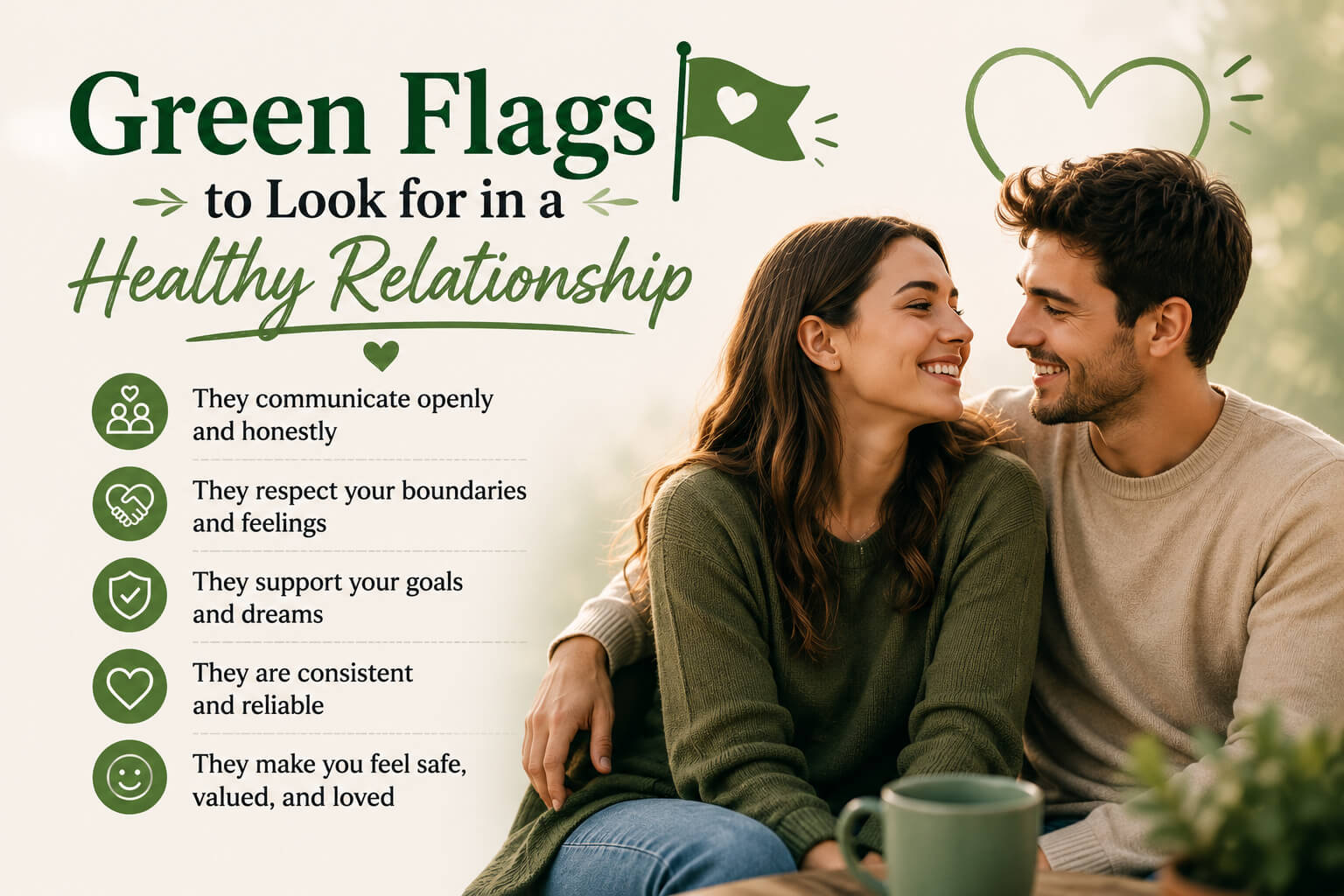
We talk a lot about red flags, but what about the signs that a relationship is actually good for you? Green flags in a relationship are the positive behaviours that show you’re with someone safe, respectful, and emotionally available. They’re the everyday signs that your connection is worth investing in long term.
Understanding green flags to look for in a healthy relationship matters just as much as spotting red flags. These signs can show up in romantic relationships, friendships, and even in early dating and learning to recognise them helps you choose partners who are genuinely capable of a healthy relationship.
What Are Green Flags in a Relationship?
Green flags are the signs of a healthy relationship: patterns of behaviour that indicate emotional safety, mutual respect, and compatibility. Where red flags warn you that something may be harmful, green flags highlight what’s working well the ways a person shows care, listens, respects your boundaries, and shows up consistently.
Experts emphasise that green flags are ongoing patterns, not one‑off romantic gestures. Anyone can send flowers once; what matters is how they treat you day after day. These relationship green flags apply not only in long‑term partnerships but also in early dating and close friendships anywhere trust and emotional closeness matter.
Why Green Flags in Relationships Matter
Green flags show a partner’s capacity to nurture a long‑term, healthy connection, not just a short‑term spark. They build emotional security, make conflict easier to handle, and help you feel safe being your authentic self. When you know what green flags look like, you’re less likely to get stuck in relationships that are exciting but unstable.
Many people focus only on chemistry or attraction and overlook green flags, which can lead them to pass up genuinely good partners in favour of more chaotic ones. Remember: green flags are patterns, not perfection. You’re looking for consistent effort and growth, not a flawless person.
Green Flag #1 – Open and Honest Communication
Open, healthy communication is one of the most important green flags in relationships according to therapists and relationship educators.
They Talk Openly and Listen Actively
In a healthy relationship, both partners can share thoughts and feelings without fear of being mocked, dismissed, or punished. They practice active listening: paying attention, asking questions, and reflecting back what they hear instead of waiting for their turn to talk. You don’t feel like you’re “walking on eggshells” just to keep the peace.
They Can Disagree Respectfully
Disagreements are inevitable, but how someone handles them is a major green flag. Healthy partners avoid contempt, name‑calling, and silent treatment, and instead approach conflict with curiosity and respect. They are receptive to feedback, willing to adjust, and interested in resolving issues rather than “winning” the argument.
Green Flag #2 – Mutual Respect and Equality
Mutual respect means your feelings, opinions, and boundaries are taken seriously, even when you disagree. Neither partner is treated as “less than,” and there is no ongoing power imbalance where one person always decides what matters.
In relationships with strong mutual respect, both partners:
- Value each other’s individuality and choices.
- Speak about others — including exes and family — with basic decency, not cruelty.
- Share decision‑making, especially on things that affect both people, such as money, living arrangements, or time.
Green Flag #3 – Trust and Honesty
Trust and honesty are central signs of a healthy relationship. You believe what your partner says without needing to check up on them, and they don’t hide important information or play games.
- They are transparent about their feelings, plans, and intentions.
- Their words match their actions over time, so you don’t have to decode mixed signals.
- They don’t pressure you to keep secrets you’re uncomfortable with or demand access to your private messages as a test of loyalty.
Trust is built through consistent, honest behaviour, not grand gestures or big promises.
Green Flag #4 – Emotional Safety and Psychological Safety
Emotional safety means you feel secure expressing your thoughts and vulnerabilities without fear of criticism, rejection, or punishment.
In an emotionally safe relationship:
- You feel calm, relaxed, and more like yourself when you’re with them.
- You can be vulnerable — crying, admitting mistakes, or sharing fears — without them using it against you later.
- You leave interactions feeling supported and energised, not drained or constantly anxious.
Emotional safety is a core green flag in a healthy relationship, and without it, other positives often won’t be enough long term.
Green Flag #5 – Healthy Boundaries and Consent
Healthy partners respect boundaries and consent the first time, and every time after.
- They accept your need for time alone, separate hobbies, and other relationships without jealousy or guilt‑tripping.
- They communicate their own limits clearly and expect them to be honoured too; boundaries go both ways.
- Around physical intimacy and emotional topics, they check in, ask what you’re comfortable with, and treat “no” or “not yet” as a full answer.
In healthy relationships, boundaries are seen as a sign of self‑respect, not rejection.
Green Flag #6 – Empathy and Genuine Emotional Support
Empathy is the ability to understand and care about how you feel, even when your partner doesn’t fully relate or agree. It shows up in many small, everyday moments.
Green flags of empathy include:
- They listen to your problems without immediately making it about themselves.
- They ask how you want to be supported (“Do you want advice or just to vent?”).
- They offer comfort, encouragement, and understanding during both good and difficult times.
You feel like they’re on your team, not judging from the sidelines.
Green Flag #7 – Accountability and Willingness to Apologise
A major relationship green flag is when someone can admit they were wrong, apologise sincerely, and actually change their behaviour.
- They don’t automatically get defensive or shift blame to you when you raise a concern.
- Their apologies are specific and paired with action — not repeated cycles of “sorry” with no difference.
- They are willing to revisit tough moments and “circle back” to repair, instead of pretending nothing happened.
Accountability also shows up outside the relationship — in how they handle work, friendships, and everyday responsibilities.
Green Flag #8 – Consistency and Reliability
Consistency is often described as one of the strongest green flags in relationships: it builds trust and emotional security.
- Their actions reliably match their words over time.
- They show up when they say they will and follow through on small promises, not just big ones.
- You don’t feel like you’re on an emotional rollercoaster of hot‑and‑cold behaviour.
Experts caution against confusing love bombing (flashy, intense early gestures) with genuine consistency; steady, reliable care matters more than dramatic displays.
Green Flag #9 – Shared Values and Long‑Term Goals
Shared values are the deeper beliefs and priorities that shape your life, such as attitudes about family, finances, honesty, and lifestyle. You don’t have to be the same person, but your long‑term visions should be compatible.
Green flags here include:
- You agree on key topics like fidelity, money basics, and big‑picture life direction.
- You can talk honestly about the future without pressure or avoidance.
- They are interested in growing together, not just enjoying the moment with no regard for where things might lead.
Green Flag #10 – Healthy Independence and Togetherness
In a healthy relationship, both partners are whole people with their own interests and support systems.
- They maintain friendships, hobbies, and self‑care routines outside the relationship — and encourage you to do the same.
- Time apart feels normal, not threatening. You don’t feel pressured to be in constant contact.
- The relationship feels like a partnership between two individuals, not two halves that can’t function alone.
Encouraging personal growth and independence is a major green flag and is linked to stronger relationship satisfaction.
Green Flag #11 – Emotional Maturity and Self‑Awareness
Emotional maturity is about how someone handles their feelings and the impact they have on others.
Signs of this green flag:
- They can recognise and name their emotions instead of exploding or shutting down.
- They understand how their actions affect you and take responsibility without excuses.
- They’re open to personal growth and don’t see feedback as a personal attack.
Emotionally mature partners are more likely to work through challenges rather than running from them or lashing out.
Green Flag #12 – They Make You Feel Heard, Valued, and Secure
Ultimately, one of the clearest signs of a healthy relationship is how you feel most of the time.
- You don’t have to beg for basic respect, attention, or affection.
- You feel listened to and taken seriously, even when your needs differ from theirs.
- You can be your authentic self — quirks, flaws, and all — without performing or pretending.
- The relationship feels generally stable and safe, not like an endless emotional rollercoaster.
No relationship is drama‑free, but healthy ones are grounded in a persistent sense of safety and being valued.
Green Flags vs Red Flags — What’s the Difference?
Understanding the contrast between green and red flags can help you quickly assess if a relationship is leaning healthy or harmful.
| Green flag | Red flag |
| Open, honest communication | Avoiding hard conversations, stonewalling, or constant miscommunication |
| Mutual respect and equality | Controlling behaviour, belittling, or dismissiveness |
| Consistent, reliable actions | Love bombing followed by withdrawal or inconsistency |
| Healthy boundaries are respected | Boundary violations, jealousy, or monitoring your behaviour |
| Accountability for mistakes | Blame‑shifting, never apologising, or always making you the problem |
| Emotional support and empathy | Emotional unavailability, manipulation, or minimising your feelings |
| Encourages your independence | Isolates you from friends, family, or interests |
Green flags create space for trust, safety, and mutual comfort, whereas red flags signal potential harm, disrespect, or instability.
Green Flags to Look for in Early Dating
In early dating, you won’t see every green flag yet, but some key ones show up quickly:
- Reciprocity – They match your effort in messaging, planning, and moving the connection forward.
- Safe, honest communication – You feel comfortable saying no, setting small boundaries, and asking questions.
- Consistency – They don’t run hot and cold; their interest is steady over time.
- Authenticity – They show up as themselves, not a “perfect” persona, and accept you as you are.
- Aligned words and actions – What they say they want (e.g., a relationship) matches how they behave.
These early relationship green flags are strong signs someone is emotionally available and capable of a healthy connection.
Signs You Are in a Genuinely Healthy Relationship
You may be in a healthy relationship if most of these are true most of the time:
- You feel emotionally safe, heard, and respected on a regular basis.
- You can be your authentic self without fear of judgement or punishment.
- Conflicts are addressed and resolved constructively, not ignored or escalated.
- Both of you grow individually and together — you don’t have to shrink to make it work.
- You feel consistently valued, supported, and trusted, even when life is stressful.
Perfection isn’t the goal; stability, respect, and willingness to grow are.
FAQs — Green Flags in a Healthy Relationship
What are the biggest green flags in a relationship?
The biggest green flags include open communication, mutual respect, trust, healthy boundaries, emotional safety, empathy, accountability, and consistent, reliable behaviour over time.
What does a green flag mean in a relationship?
A green flag is a positive, healthy sign in a partner’s behaviour that shows they are emotionally available, respectful, and capable of building a lasting, secure relationship.
What are green flags to look for in early dating?
Reciprocity, consistent effort, safe and honest communication, authenticity, and actions that align with words are key green flags to watch for in early dating.
What is the difference between green flags and red flags in a relationship?
Green flags are signs of safety, respect, and emotional health, while red flags are warning signs of controlling, disrespectful, or harmful patterns such as manipulation, boundary violations, or chronic dishonesty.
Can a relationship have both green flags and red flags?
Yes. Most relationships have a mix of strengths and problems. The key is whether the green flags significantly outweigh the red ones and whether both partners are willing to address issues and grow.
How do I know if I am in a healthy relationship?
You likely are if you feel emotionally safe, can express yourself freely, have your boundaries respected, resolve conflict constructively, and feel consistently valued and supported.
Final Thoughts — Recognising Green Flags Matters
Knowing what healthy love looks and feels like is the first step to choosing it. Green flags are not about finding a perfect partner; they’re about noticing the consistent behaviours that build safety, respect, and connection over time. If you haven’t experienced many of these signs before, it doesn’t mean you never will it simply means you’re now learning a new standard.
Start by noticing one green flag or one that feels missing in your current or past relationships. That awareness can guide you toward relationships that truly support your wellbeing and away from those that don’t.
Also Checkout: Green Flags to Look for in a Healthy Relationship