Love can feel confusing when the emotional connection in a relationship changes over time. Many couples worry that if the excitement fades, the bond is disappearing too.
Science shows something very different. Emotional bonding is a biological and psychological process shaped by brain chemistry, attachment, trust, shared experiences, and emotional intimacy. Strong couples build lasting emotional connection through consistent emotional safety, responsiveness, and intentional closeness — not endless passion alone.
Why Emotional Bonding Feels So Powerful
When we emotionally bond with someone, our brain begins treating that person as a source of comfort, reward, and safety. This is why a supportive partner can calm our stress faster than almost anything else.
Researchers like Dr. John Gottman, Helen Fisher, John Bowlby, and Lucy Brown spent decades studying why some couples stay emotionally close for years while others slowly disconnect.
Their findings point to one core truth:
Strong relationships are not built by luck. They are built by repeated moments of emotional connection, trust, responsiveness, and emotional intimacy.
What Is Emotional Bonding Between Couples?
Emotional bonding is the deep sense of connection, trust, security, and closeness two people develop over time.
In healthy relationships, emotional bonding creates the feeling that:
- “You understand me.”
- “I feel emotionally safe with you.”
- “We are on the same team.”
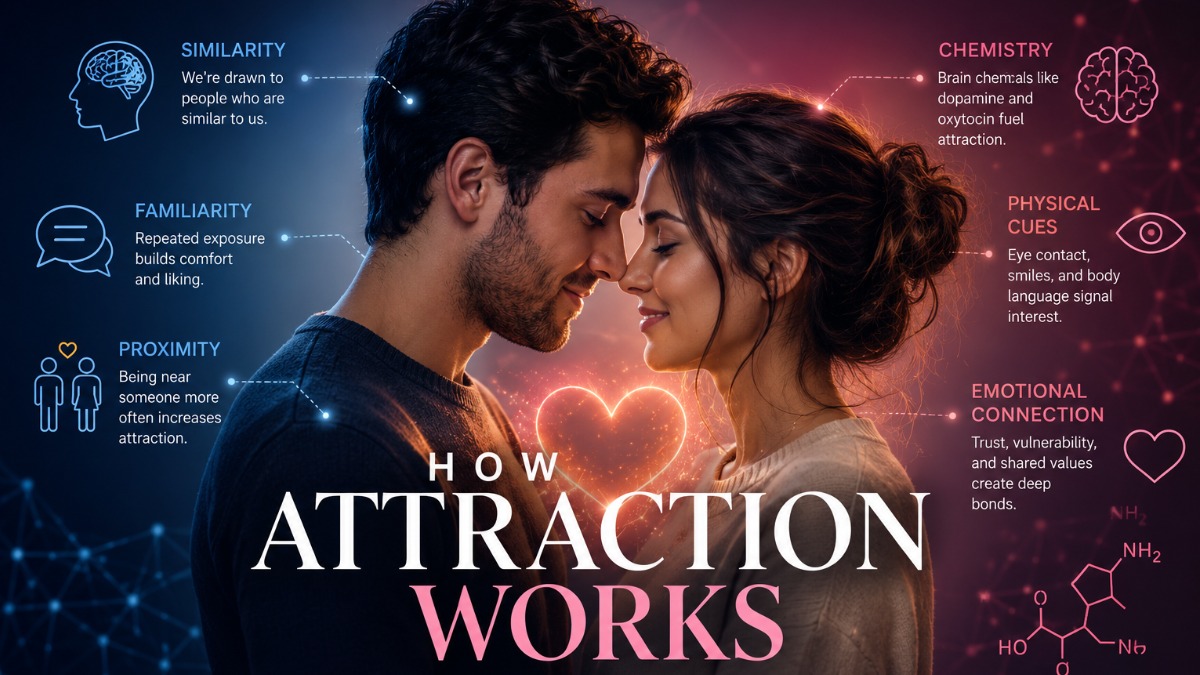
Romantic love may begin with attraction, chemistry, and excitement. Emotional connection is what transforms attraction into long-term attachment.
Love vs. Emotional Connection
Many couples confuse intense attraction with emotional bonding.
Attraction creates excitement. Emotional connection creates stability.
A relationship can survive temporary stress if emotional intimacy exists. Without emotional bonding, even strong attraction often fades under pressure.
The Three Components of Emotional Intimacy
Emotional Intimacy
This happens when couples openly share:
- fears
- dreams
- insecurities
- emotional needs
- personal experiences
Emotional intimacy grows when vulnerability feels safe instead of punished.
Intellectual Intimacy
This refers to meaningful conversations and mental connection.
Couples with strong intellectual intimacy often:
- enjoy discussing ideas
- feel curious about each other
- respect differences in perspective
- feel mentally stimulated together
Psychological Intimacy
Psychological intimacy is the feeling of emotional security inside the relationship.
It answers questions like:
- “Can I trust you emotionally?”
- “Will you stay emotionally present during conflict?”
- “Can I fully be myself around you?”
Sternberg’s Triangle of Love
Psychologist Robert Sternberg proposed that lasting romantic love includes three elements:
| Component | Meaning |
|---|---|
| Passion | Physical attraction and desire |
| Intimacy | Emotional closeness and connection |
| Commitment | Choosing the relationship long-term |
Healthy emotional bonding strengthens all three.
The Neuroscience — What Happens in the Brain?
Love feels emotional, but the brain treats it like a full-body neurological event.
Brain scans show that at least 12 brain regions work together during romantic attachment and emotional bonding.
The Ventral Tegmental Area (VTA)
The VTA plays a major role in attraction and reward.
This region produces dopamine — the “feel-good” neurotransmitter connected to:
- motivation
- pleasure
- anticipation
- emotional reward
When couples bond emotionally, the brain begins associating the partner with safety and reward.
The Amygdala
The amygdala processes fear and emotional threat.
Interestingly, research shows that during romantic love, activity in this region often decreases. This reduction can help couples feel calmer, emotionally open, and less defensive around each other.
The Hippocampus and Prefrontal Cortex
These areas help process:
- emotional memories
- emotional meaning
- decision-making
- relationship learning
This is one reason emotionally meaningful experiences become deeply memorable inside relationships.
Helen Fisher’s Three Systems of Love
Helen Fisher identified three brain systems connected to relationships:
| Brain System | Purpose |
|---|---|
| Sex Drive | Motivates sexual attraction |
| Romantic Attraction | Creates obsession and excitement |
| Partner Attachment | Builds long-term emotional bonding |
Many couples panic when intense obsession fades. In reality, the brain is often transitioning from attraction into deeper attachment.
Mirror Neurons and Emotional Synchronization
Couples in long-term relationships often mirror:
- expressions
- speech patterns
- emotional reactions
- body language
This happens partly because of the brain’s mirror neuron system.
Over time, emotionally close couples begin influencing each other’s nervous systems. One partner’s calmness can literally regulate the other’s stress response.
Long-Term Love Still Activates Reward Circuits
One of the most encouraging findings from neuroscience research is this:
Couples married for 20+ years can still show activation in the brain’s reward pathways when viewing photos of their partner.
The form of love evolves, but the emotional bonding systems remain active.
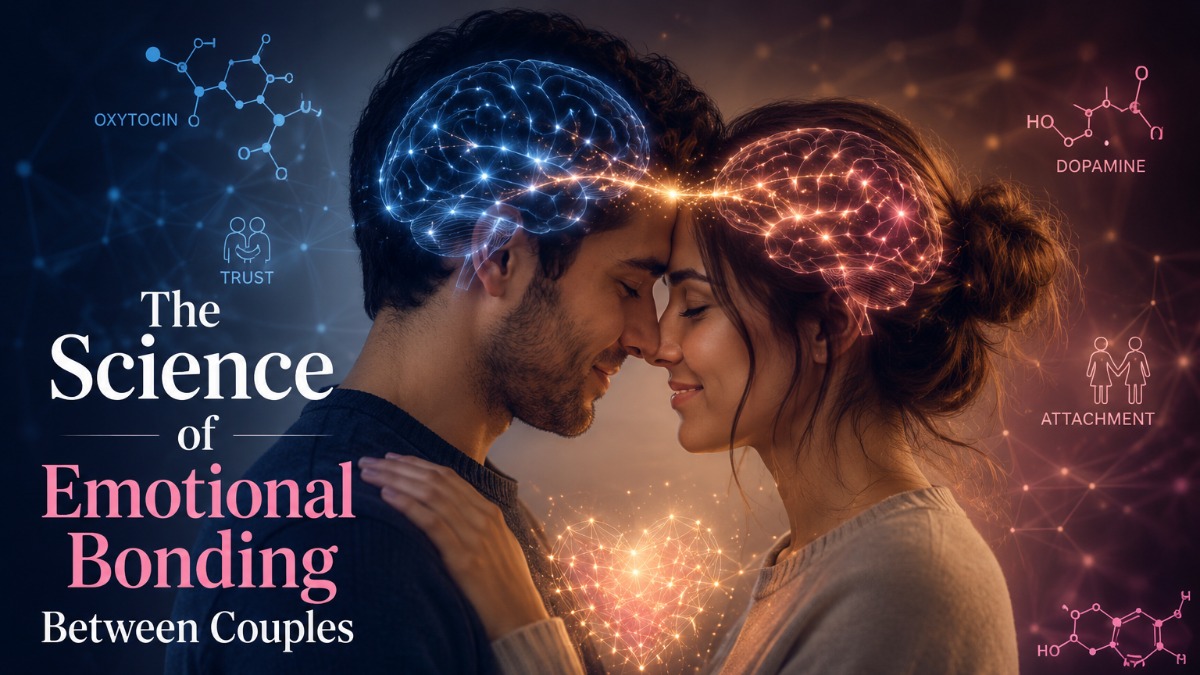
The Chemistry of Love — Key Hormones
Emotional bonding depends heavily on brain chemistry.
Different hormones influence different phases of romantic relationships.
| Hormone | Role in Emotional Bonding |
|---|---|
| Dopamine | Pleasure, motivation, excitement |
| Oxytocin | Trust, bonding, emotional closeness |
| Serotonin | Mood regulation and emotional stability |
| Norepinephrine | Energy, alertness, excitement |
| Vasopressin | Long-term attachment and commitment |
Dopamine: The Reward Chemical
Dopamine spikes during attraction and emotional excitement.
This is why early-stage romantic love can feel euphoric and highly energizing.
Oxytocin: The Bonding Hormone
Oxytocin plays a massive role in emotional intimacy and trust.
It increases during:
- hugging
- kissing
- affectionate touch
- eye contact
- emotional vulnerability
Micro-Step Couples Can Try Tonight
Sit facing each other for two uninterrupted minutes.
Maintain soft eye contact and ask:
“What has felt emotionally heavy for you lately?”
Do not interrupt or solve the problem. Simply listen.
This combination of eye contact, emotional openness, and attentive presence often strengthens emotional connection immediately.
Serotonin and Emotional Stability
Early romantic love can temporarily lower serotonin levels, which may explain obsessive thinking about a new partner.
Over time, serotonin stabilizes and supports calmer emotional attachment.
Vasopressin and Long-Term Pair Bonding
Vasopressin is strongly connected to long-term attachment, loyalty, and pair bonding.
Research suggests it works alongside oxytocin to help sustain deep emotional connection over time.
Stages of Emotional Bonding
Emotional bonding evolves in stages.
Understanding these stages helps couples avoid panicking when relationships naturally change.
Stage 1 — The Honeymoon Phase
This phase is dominated by:
- dopamine
- norepinephrine
- novelty
- excitement
Partners often idealize each other during this stage.
Everything feels emotionally intense.
Stage 2 — Deepening Attachment
As the relationship stabilizes, oxytocin and vasopressin become more influential.
This stage focuses more on:
- emotional safety
- reliability
- comfort
- trust
- vulnerability
This transition often feels less dramatic emotionally, but much deeper psychologically.
Stage 3 — Long-Term Emotional Bonding
Long-term bonding creates emotional familiarity and attachment security.
Strong couples in this phase often describe their partner as:
- home
- calming
- grounding
- emotionally safe
The excitement may become steadier, but emotional intimacy often grows stronger.
Attachment Theory — The Foundation
Attachment theory changed how psychologists understand relationships.
John Bowlby argued that humans need emotional connection “from cradle to grave.”
Our early attachment experiences influence how we:
- trust
- communicate
- handle conflict
- seek reassurance
- tolerate emotional closeness
Secure Attachment
Securely attached people usually:
- communicate openly
- tolerate vulnerability
- trust more easily
- recover from conflict faster
Secure attachment is strongly linked to relationship satisfaction.
Anxious Attachment
People with anxious attachment often fear abandonment.
They may:
- overthink communication
- seek reassurance frequently
- feel emotionally unsafe during distance
Avoidant Attachment
Avoidant individuals often protect themselves through emotional distance.
They may:
- struggle with vulnerability
- withdraw during conflict
- feel overwhelmed by emotional dependence
Allan Schore and Emotional Brain Development
Psychiatrist Allan Schore emphasized that emotional communication in infancy helps wire the developing brain.
This early emotional wiring later shapes adult romantic relationships.
The encouraging part:
attachment patterns can improve through emotionally safe relationships.
How Couples Build Emotional Bonds
Emotional bonding is not built through one grand romantic gesture.
It grows through repeated small moments.
6.1 Bids for Connection (Gottman Research)
A “bid for connection” is a small attempt to gain emotional attention.
Examples:
- “Look at this funny video.”
- “I had a stressful day.”
- “Can we talk for a minute?”
According to Dr. John Gottman, healthy couples consistently “turn toward” these bids instead of ignoring them.
Micro-Step
Tonight, when your partner speaks to you:
- pause what you’re doing
- make eye contact
- respond warmly
Small moments shape emotional intimacy more than dramatic ones.
6.2 Emotional Interdependence
Emotionally connected couples influence each other’s moods constantly.
Supportive relationships reduce stress hormones and improve emotional regulation.
The more emotionally safe time couples spend together, the stronger emotional interdependence becomes.
6.3 Self-Disclosure and Vulnerability
Researchers Harry Reis and Phillip Shaver found that intimacy grows through:
- vulnerability
- responsiveness
- validation
- trust
Conversation Exercise
Ask each other:
- “What’s something you wish people understood about you?”
- “When do you feel most emotionally connected to me?”
- “What helps you feel emotionally safe?”
6.4 Positive Shared Experiences
Novel shared experiences activate dopamine pathways and strengthen emotional bonding.
Couples often reconnect emotionally when they:
- travel together
- learn something new
- laugh together
- solve challenges together
The brain associates the relationship with positive emotional reward.
How Conflict Can Strengthen Bonds
Conflict itself does not destroy emotional intimacy.
Emotional disconnection during conflict does.
Strong couples repair emotional ruptures effectively.
What Emotional Safety Looks Like During Conflict
| Harmful Response | Healthy Response |
|---|---|
| Defensiveness | Curiosity |
| Mocking | Respect |
| Shutting down | Emotional presence |
| Winning arguments | Understanding feelings |
A Better Conflict Formula
Curiosity + Compassion + Patience + Empathy = Emotional Safety
Micro-Step During Arguments
Instead of:
“You never listen.”
Try:
“I don’t feel emotionally heard right now. Can we slow down for a minute?”
That single shift reduces emotional threat dramatically.
Mental Intimacy — The Deeper Layer
Mental intimacy combines:
- emotional closeness
- intellectual connection
- psychological safety
Couples with strong mental intimacy usually:
- talk openly for long periods
- feel emotionally understood
- trust each other deeply
- share inner thoughts freely
Research consistently links mental intimacy to higher relationship satisfaction and stronger sexual connection.
People feel more physically connected when they feel emotionally safe first.
10 Science-Backed Tips to Strengthen Emotional Bonding
1. Learn Your Partner’s Inner World
Know:
- their stress triggers
- fears
- dreams
- emotional needs
Try Tonight
Ask:
“What’s been on your mind lately that you haven’t talked about much?”
2. Ask Meaningful Questions
Surface-level conversation rarely builds emotional intimacy.
Ask:
- “What makes you feel appreciated?”
- “What kind of support helps you most?”
3. Turn Toward Bids for Connection
Respond warmly to small emotional invitations.
Tiny moments build trust.
4. Increase Physical Affection
Hugs, touch, and cuddling trigger oxytocin release.
Even brief affectionate touch can reduce stress hormones.
5. Maintain Eye Contact
Eye contact increases emotional attunement and presence.
Put distractions away during important conversations.
6. Create Positive Shared Experiences
Novelty stimulates dopamine.
Try:
- cooking together
- taking walks
- exploring new places
- learning a hobby together
7. Handle Conflict With Empathy
Focus less on proving a point and more on understanding emotional needs.
8. Practice Active Listening
Validation matters deeply.
Try saying:
“I can understand why that affected you.”
Feeling understood strengthens attachment security.
9. Express Appreciation Frequently
Long-term couples often stop verbalizing appreciation.
Bring it back intentionally.
Micro-Step
Say one specific appreciation daily:
“I noticed how supportive you were today. That meant a lot to me.”
10. Become a Safe Emotional Space
The strongest emotional bonds form when partners feel emotionally safe being fully themselves.
Emotional safety means:
- no ridicule
- no emotional punishment
- no weaponizing vulnerability
Safety builds trust. Trust builds intimacy.
Long-Term Emotional Bonding — What Science Says
Research from long-term relationship studies shows that love evolves rather than disappears.
Romantic attachment exists partly to help humans form stable pair bonds and cooperative partnerships.
Emotionally connected couples often experience:
- lower stress
- better emotional health
- stronger resilience
- greater life satisfaction
Long-term emotional bonding benefits both the brain and the body.
Healthy relationships literally help regulate the nervous system.
The Real Science Behind Lasting Love
Science shows that emotional bonding is not imaginary or accidental.
Brain chemistry, attachment patterns, emotional intimacy, trust, vulnerability, and daily interactions all shape how couples connect emotionally over time.
Love begins biologically, but lasting emotional bonding becomes a series of intentional choices:
- listening carefully
- responding warmly
- showing empathy
- creating emotional safety
- staying emotionally present
The strongest couples are not simply lucky.
They are emotionally intentional.
Tonight, choose one small action from this article and practice it with your partner. Small moments repeated consistently are what transform relationships into deep emotional bonds that last for years.