They showered you with gifts, texted constantly, and called you their soulmate all within the first two weeks. It felt incredible, almost like something out of a movie. But underneath the butterflies, something also felt… off. You might have wondered: “Is this real love, or is something wrong here?”
What you’re experiencing could be love bombing a pattern of overwhelming affection and attention used to gain control over you. Mental health experts describe love bombing as a form of psychological and emotional abuse that is often disguised as flattery and romance. This article explains what love bombing is, the warning signs to watch for, the typical phases, and how to protect and heal yourself if you suspect you’re being manipulated.
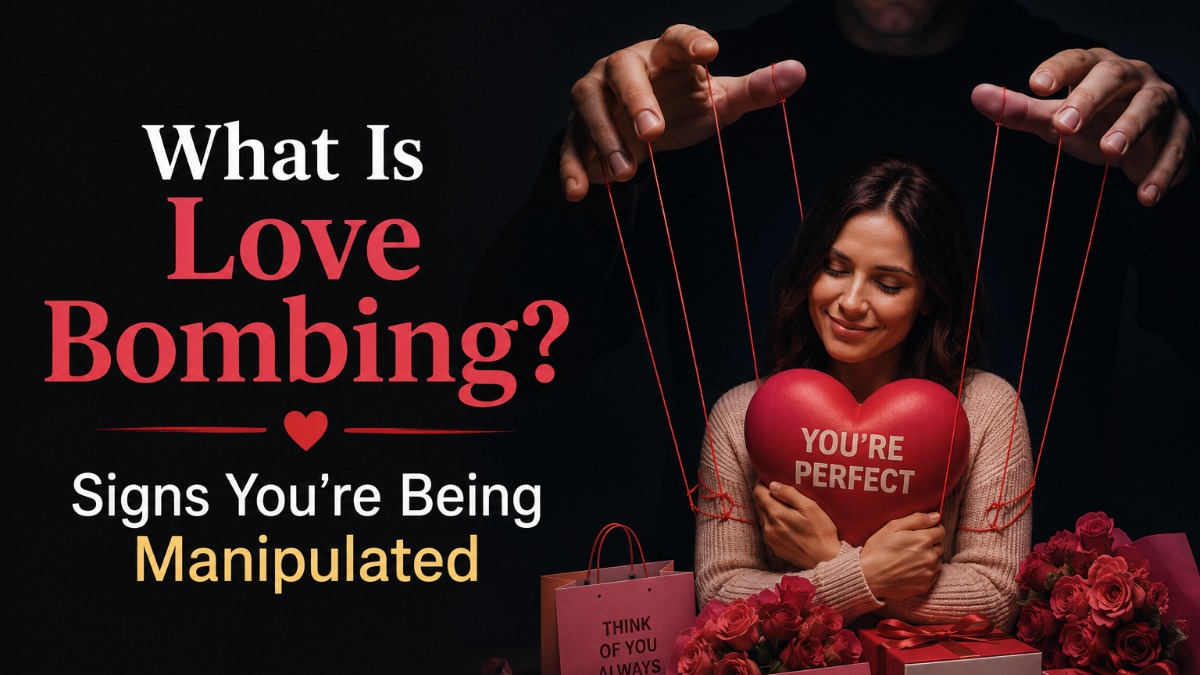
What Is Love Bombing?
Love bombing is an overwhelming, excessive display of attention, affection, and gifts designed to quickly gain your trust, create emotional dependency, and ultimately control you. It usually happens in the early stages of dating or a relationship, but can also reappear later, especially after conflicts or breakups, as a way to pull you back in. On the surface, it looks like intense love; in reality, it is a tactic.
Advocacy organizations and mental health professionals classify love bombing as a form of emotional and psychological abuse because it uses romance and flattery as tools for manipulation. It is strongly associated with narcissistic traits and narcissistic personality patterns, where a person craves admiration, power, and emotional dominance. However, anyone not only narcissists — can engage in love bombing when driven by insecurity, control, or unresolved trauma. As Cleveland Clinic emphasises, this behaviour is psychological and emotional abuse disguised as excessive flattery and affection.
Why Do People Love Bomb? (The Psychology Behind It)
People love bomb for different psychological reasons, but most motives revolve around insecurity, fear of loss, and a need for control.
- Narcissistic traits and NPD patterns: Individuals with narcissistic traits often use love bombing to secure admiration and emotional supply. They idealise you at first, then later devalue and discard you once they feel secure or bored.
- Control and power: Love bombing creates a fast, intense bond so that you become emotionally dependent, making it easier for the person to influence your decisions, boundaries, and sense of self.
- Fear of abandonment and anxious attachment: Some people bombard partners with affection because they are terrified of being left and believe intensity will keep you close.
- Codependency and poor emotional regulation: In some cases, the person is not consciously trying to abuse you; they may confuse intensity with love and repeat unhealthy patterns learned earlier in life.
At its core, the goal of love bombing is to make the recipient feel dependent on and emotionally obligated to the person before their true, controlling behaviour fully appears. It’s less about connection and more about power.
12 Warning Signs of Love Bombing
Below are common, research‑backed red flags that what you’re experiencing is love bombing and not genuine affection.
1. Excessive Compliments and Flattery From Day One
From the first conversation, they tell you that you’re perfect, their soulmate, or unlike anyone they’ve ever met. The praise is constant, over‑the‑top, and arrives before they know much about you. It can feel intoxicating at first, but it often serves to fast‑track emotional intimacy and lower your guard.
2. Lavish Gifts and Grand Gestures Too Soon
They bring expensive presents, pay for everything, or plan extravagant surprises very early in the relationship. Advocacy groups note that over‑the‑top gifts, particularly in early stages, are a classic love bombing sign and may later be used to create guilt or a sense of obligation. You may hear, “After everything I’ve done for you…” used as leverage when you try to set boundaries.
3. Rushing Commitment and Talking About the Future
Within days or weeks, they talk about marriage, moving in together, or lifelong plans. They may push you to be exclusive quickly, even if you’ve barely had time to process your feelings. This intensity isn’t about romance; it’s about locking you in before you can see red flags.
4. Constant, Relentless Communication
You receive nonstop texts, calls, DMs, and comments sometimes from morning until night. If you take time to respond, they question where you were, interpret delays as rejection, or guilt‑trip you. While it looks like adoration, it can function as surveillance and control over your time and attention.
5. Mirroring Your Interests and Values Perfectly
They seem to love everything you love: your music, hobbies, beliefs, and even life goals. While genuine common interests are normal, love bombers often mirror you so precisely that it feels almost too perfect. Mirroring is a manipulation tactic used to build rapid trust and make you feel deeply “seen” and understood.
6. They Cannot Accept “No” or Boundaries
When you set a boundary needing space, slowing down, or saying no to a plan they respond with anger, sulking, guilt‑tripping, or emotional withdrawal. They may say things like, “If you really cared, you’d want to be with me all the time,” turning your healthy limits into proof that you don’t love them enough.
7. Isolation From Friends and Family
Over time, they criticise your friends and family, suggest that others “don’t understand you,” or complain when you spend time away. Love bombers often become jealous of your other relationships and attempt to isolate you so your focus is entirely on them. This removes your support network, making you easier to control.
8. Making You Feel Guilty for Time Spent Away
You start cancelling plans, skipping events, or dropping hobbies because you fear upsetting them. When you choose other commitments, they punish you with withdrawal, passive‑aggressive comments, or accusations like “You don’t care about us”. Over time, guilt keeps you prioritising their needs over your own.
9. Declarations of Soulmate Status or “Destiny”
They quickly use fate‑based language: “We were meant to be,” “You’re my twin flame,” or “I knew from the moment I saw you.” While some people genuinely feel strong early chemistry, love bombers use these phrases repeatedly and intensely to make the relationship feel special and irreplaceable. This makes it psychologically harder for you to leave.
10. Mood Swings — Warm Then Cold
After the initial flood of affection, their behaviour becomes inconsistent. When you comply with what they want, they are loving and attentive; when you disagree or assert yourself, they become distant, critical, or cruel. This love‑hate cycle keeps you emotionally destabilised and constantly working to get back to the “good” phase.
11. Using Gaslighting to Maintain Control
Gaslighting involves denying your reality, twisting facts, or making you doubt your own perceptions. When you express discomfort, they say things like, “You’re overreacting, I just love you so much,” or “You’re too sensitive; anyone would be grateful for this”. Over time, you may start to question your instincts and rely on their version of events.
12. You Feel Overwhelmed, Uneasy, or Off‑Balance
Perhaps the most important sign: your gut tells you something is off. Instead of feeling grounded and safe, you feel rushed, pressured, or emotionally exhausted. Healthy relationships may feel exciting, but they do not feel suffocating or chaotic. If it seems too good to be true and your anxiety keeps spiking it’s worth taking a step back.
The 3 Phases of Love Bombing
Experts on narcissistic abuse describe a common pattern in love bombing often called the idealize–devalue–discard cycle.
Phase 1 — Idealization
At first, you are placed on a pedestal. They shower you with compliments, affection, gifts, and attention, making you feel uniquely special and chosen. This “honeymoon on steroids” phase is designed to lower your defenses and create a strong emotional bond very quickly.
Phase 2 — Devaluation
Once they feel you’re emotionally hooked, the tone shifts. Criticism, jealousy, and controlling behaviours slowly replace unconditional praise. They may mock your feelings, question your worth, or tell you that your friends and family are against you. The same person who once adored you now makes you feel small and confused.
Phase 3 — Discard (and Hoovering)
In the discard phase, the love bomber may abruptly end the relationship, pull away emotionally, or treat you with cold indifference. This can feel devastating, especially after such an intense start. Often, they later attempt “hoovering” — reaching back out with apologies, new promises, and another round of love bombing to pull you back into the cycle. If you return, the pattern usually repeats.
This cycle is designed to keep you destabilised and dependent, questioning yourself instead of their behaviour.
Love Bombing vs Genuine Love — What’s the Difference?
Because love bombing can look like “romance on overdrive,” it’s crucial to know how it differs from healthy, genuine love.
| Aspect | Love bombing | Genuine love |
| Speed | Intense from day one; feels rushed | Develops naturally and gradually over time |
| Perfection | Feels too perfect, too fast | Acknowledges flaws but stays consistent |
| Pressure | Overwhelms and pressures you | Respects your pace and comfort level |
| Boundaries | Ignores or reacts badly to “no” | Welcomes and respects boundaries |
| Affection | Conditional; used as reward or punishment | Stable; does not vanish when you disagree |
| Social circle | Isolates you from friends/family | Encourages your other relationships |
| Vulnerabilities | Uses your wounds against you | Supports your healing and growth |
| Emotional state | Leaves you anxious, confused, or drained | Helps you feel safe, calm, and secure |
A powerful test is this: How does the person react when you slow things down or say no? Healthy partners adjust, respect your limits, and want you to feel safe. Love bombers become upset, manipulative, or distant when they can’t control the pace.
Who Is Most at Risk of Being Love Bombed?
Anyone can be targeted, but certain factors make people more vulnerable:
- Anxious attachment style – People who fear abandonment and crave reassurance may find intense early affection especially compelling.
- Low self‑esteem or past trauma – Those who feel unworthy, have experienced abuse, or have been lonely for a long time may cling to love bombing as proof of their value.
- Recent breakup or isolation – After heartbreak or a period of deep loneliness, love bombing can feel like a rescue, making red flags easier to ignore.
- Highly empathetic people (“empaths”) – Empathetic individuals often overlook their own discomfort to care for others, which love bombers can exploit.
- Hopeless romantics – People who strongly romanticise “fated” love and fairy‑tale relationships may be more prone to believing intense early declarations.
Being targeted is not your fault; abusers and manipulators often choose caring, trusting people precisely because of these strengths.
Manipulation Tactics Used in Love Bombing
Love bombing rarely exists alone; it’s usually part of a broader pattern of emotional manipulation. Common tactics described by clinicians and abuse educators include:
Isolation
They gradually pull you away from friends, family, and outside support. They become jealous, make you feel guilty for seeing others, or insist that “no one understands our relationship like we do”. Without your support network, it’s harder to question what’s happening.
Excessive Affection as a Hook
The dopamine “high” from constant affection, sex, and attention creates emotional dependency. You begin to crave their approval and the intense highs of the relationship, even when the lows become painful.
Guilt and Shame
They make you feel guilty for setting boundaries, having needs, or wanting space. Comments like “I guess I just care more than you do” or “After everything I’ve done for you?” are used to shame you into compliance.
Gaslighting
Gaslighting keeps you confused and easier to control. They deny things they said, minimise hurtful behaviour, or label you “crazy” or “too sensitive” when you react. Over time, you may stop trusting your own perceptions and rely on theirs instead.
Threats of Withdrawal
They may threaten to leave, cheat, or withdraw affection if you don’t give them what they want. Even subtle statements like “Maybe we’re just not meant to be if you can’t prioritise me” are used as emotional leverage.
The Love‑Hate Cycle
Alternating intense affection with coldness, criticism, or silent treatment creates a push‑pull dynamic. This pattern can lead to trauma bonding, where the emotional rollercoaster becomes addictive, and leaving feels nearly impossible.
Is Love Bombing a Form of Abuse?
Yes. Advocacy groups, universities, and mental health professionals recognise love bombing as a form of emotional and psychological abuse. It may not leave physical marks, but it can cause serious harm, including:
- Chronic anxiety and hypervigilance
- Erosion of self‑esteem and self‑trust
- Trauma bonding and difficulty leaving harmful relationships
- Symptoms similar to post‑traumatic stress after the relationship ends
The key difference between love bombing and healthy affection is intent and impact: love bombing is about control, not care. It is often the entry point into a broader pattern of domestic or emotional abuse.
If you ever feel unsafe, threatened, or trapped, contact a local domestic violence helpline or emergency services immediately.
How to Protect Yourself From Love Bombing
You deserve relationships that feel safe, not suffocating. These steps can help you stay grounded and protect yourself.
1. Trust Your Gut — If It Feels Too Good to Be True, Pause
If the intensity is making you uncomfortable or exhausted, don’t ignore that feeling. Take a step back, slow down communication, and give yourself time to observe their behaviour over a longer period.
2. Set Clear Boundaries Early
State your limits around communication, time, physical intimacy, and commitment. Then, watch how they respond. Someone who genuinely cares will respect your boundaries; a love bomber will try to argue, guilt‑trip, or ignore them.
3. Don’t Accept Gifts or Favours That Feel Conditional
You are never obligated to stay, agree, or forgive because someone gave you gifts or did things for you. If presents feel like pressure or debt, it is okay to decline them or state your discomfort.
4. Keep Your Support Network Strong
Continue seeing your friends and family, and be honest about what’s happening. Outside perspectives are often the first to notice red flags you might be too close to see. If a new partner discourages you from talking to others, treat that as a serious warning sign.
5. Take the Relationship Slowly
Healthy love does not need to be rushed. Take your time getting to know them in different contexts, including how they handle frustration, disagreement, and boundaries. You are allowed to say, “I want to slow down,” at any time.
6. Document Patterns of Behaviour
If something feels wrong, write down specific incidents with dates and what was said or done. This can help you see patterns over time and counter gaslighting when you’re told “it’s all in your head”.
7. Seek Therapy or Professional Support
A therapist or counsellor can help you understand what’s happening, rebuild self‑trust, and make a safety plan if needed. Support groups and hotlines can also provide validation and practical guidance when you feel unsure.
How to Recover After Being Love Bombed
Healing from love bombing takes time and self‑compassion, but it is absolutely possible.
- Accept that the “perfect partner” was a performance. Their idealised version of love was designed to hook you, not a reflection of your worth.
- Allow yourself to grieve. You may miss the intense highs, even while knowing the relationship was unhealthy. Both feelings can be true at the same time.
- Rebuild self‑esteem. Therapy (including CBT and trauma‑focused approaches) can help repair the damage to your self‑worth and trust in your own judgment.
- Reconnect with your support system. Spend time with friends, family, hobbies, and communities that remind you who you are outside the relationship.
- Practice new boundaries. Learn to say no, take things slowly, and check in with your body’s signals in future relationships.
- Watch for trauma bonding. It’s common to feel pulled back to the person, especially when they “hoover” you with fresh affection. Remember: the love‑bombing phase was part of the abuse cycle, not proof of real safety.
If you feel in danger at any point, prioritise your safety and seek immediate help from local services or hotlines.
Frequently Asked Questions
Q: What is love bombing in simple words?
Q: How do you know if you are being love bombed?
Q: Is love bombing always intentional?
Q: Can love bombing happen in a long-term relationship?
Q: Is love bombing a sign of narcissism?
Q: How long does the love bombing phase last?
What is the difference between love bombing and a honeymoon phase?
Q: What should I do if I think I’m being love bombed?
Conclusion
Love bombing is not romance it’s a calculated pattern of overwhelming affection designed to create dependency and control. It often follows a cycle of idealization, devaluation, and discard, leaving you anxious, confused, and doubting your own reality. Recognising the signs is the first step toward protecting yourself and breaking free from manipulation.
Genuine love is patient, consistent, and respects your boundaries. It encourages your independence, supports your other relationships, and helps you feel safe rather than overwhelmed. You deserve that kind of love and it’s absolutely okay to walk away from anything that makes you feel small, pressured, or afraid.